How to Get Rid of Ants in the Lawn

Last Updated: July 24, 2025
Gordon Reidy
Ant Control

Ants in the lawn can be annoying, unsightly and sometimes painful! Being able to enjoy your backyard is a right for all homeowners. Certainly, if you have children and pets, you want them to be able to enjoy playing on the lawn without getting bitten.

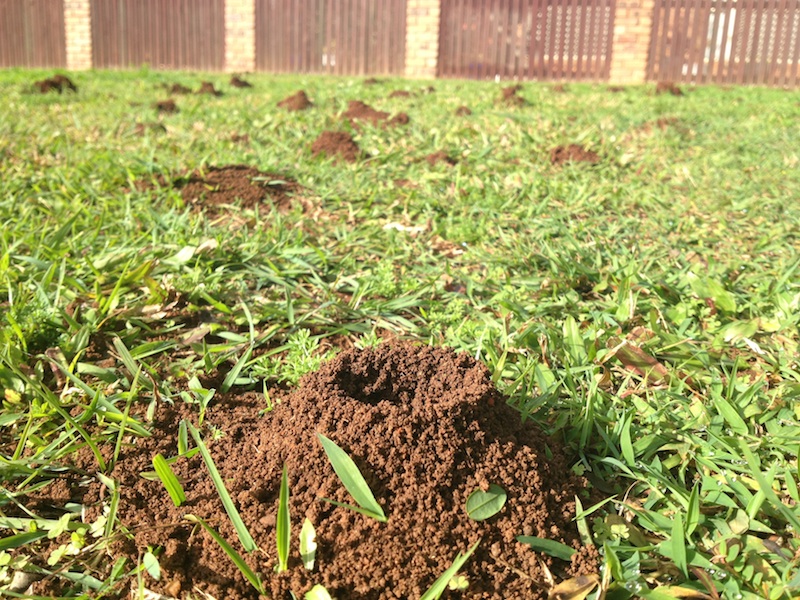
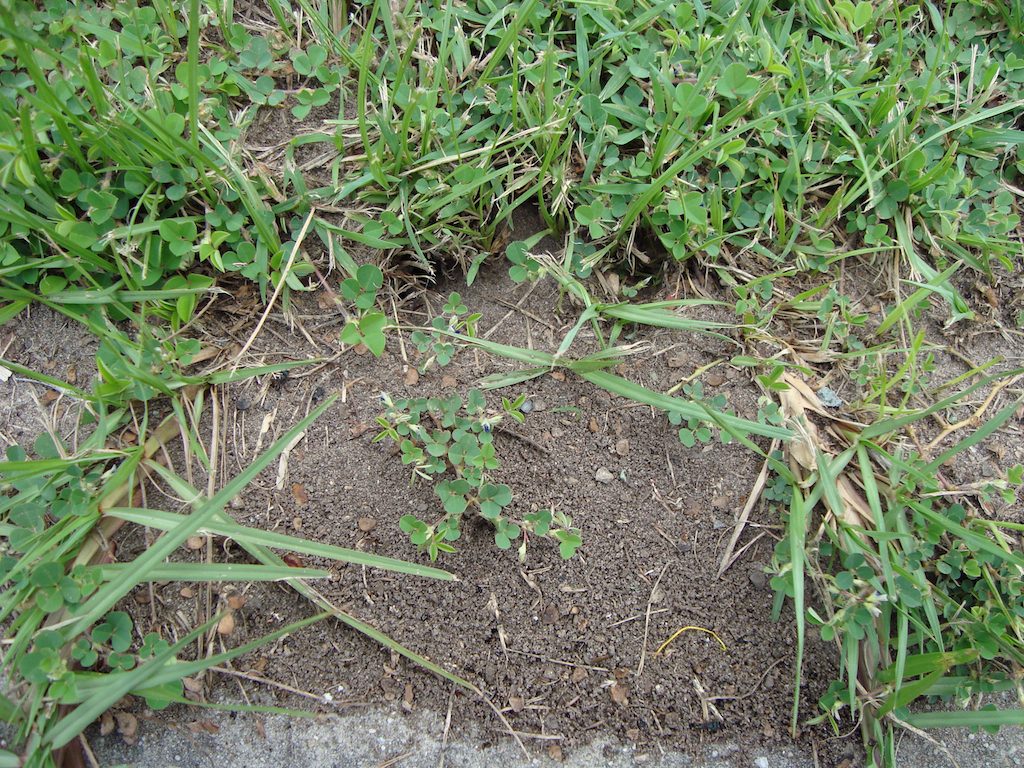
Green head ant nest
Green headed ant nest in lawn
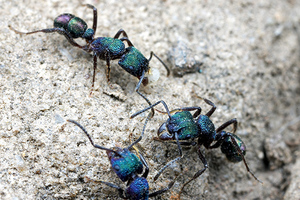
green head ant workers
Green headed ants deliver a painful sting

Ants that set up home in and around your lawn tend to be ants that bite or sting. Green head ants will be well known to many people giving a painful sting that may itch for several days afterwards. But there are a number of smaller, faster moving ants (such as tyrant ants) that also give a mild sting or bite – not as painful, but still annoying.

As with all ant control treatments, the aim is to kill the queen – the egg-laying machine – to ensure the colony cannot recover from a treatment. If you can find the nest, you can try and treat the nest directly either by flooding the nest with insecticide or treating the nest with ant bait.

Treat the ant nest with liquid insecticide…

If you can find the nest (not always easy), injecting the nest can be a bit problematic. Firstly, you don’t want to get bitten! The best option for this approach would be to use a product like PestXpert Outdoor Perimeter spray; with its 1m metal spray wand, you can probe into the ground and still keep your hand well away from biting ants. Secondly, you need to ensure that all the underground chambers have been treated. Whereas it’s never possible to guarantee you’ve treated the whole nest, the aim is to ‘flood’ the nest with insecticide and spraying for about 30 seconds per nest entrance is a good guide. If successful this should deliver fairly immediate results, with the nest dead in a matter of hours.

Use ant bait to get rid of ants in the grass

Ant baits are the smart way to eliminate an ant problem. Baits consist of a food attractive to the ants and a slow acting insecticide. Ants take the bait back to the nest and feed it to their nest mates, including the queen. The slow acting insecticides allow the ants to consume all the bait before they experience any toxic effects. By the time it kicks in, it’s too late, they have all eaten the bait and the colony is doomed. The challenge with using ant baits is that you need to choose bait attractive to the species of ant causing the problem – each species of ant has slightly different food preferences and these preferences change throughout the year.

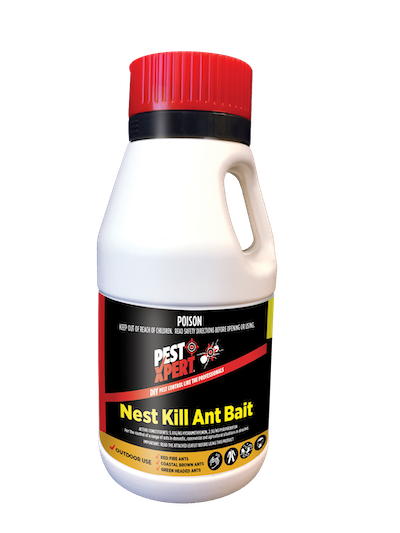
An ideal solution for this problem is PestXpert Nest Kill Ant Bait. The bait contains two different food granules to appeal to a wide range of ant species and maintain attractiveness as their food preferences change. Primarily consisting of a protein granule and carbohydrate-based granule, this bait is ideally suited to lawn ants that tend to be protein feeders – they use their stings to immobilize their animal prey.
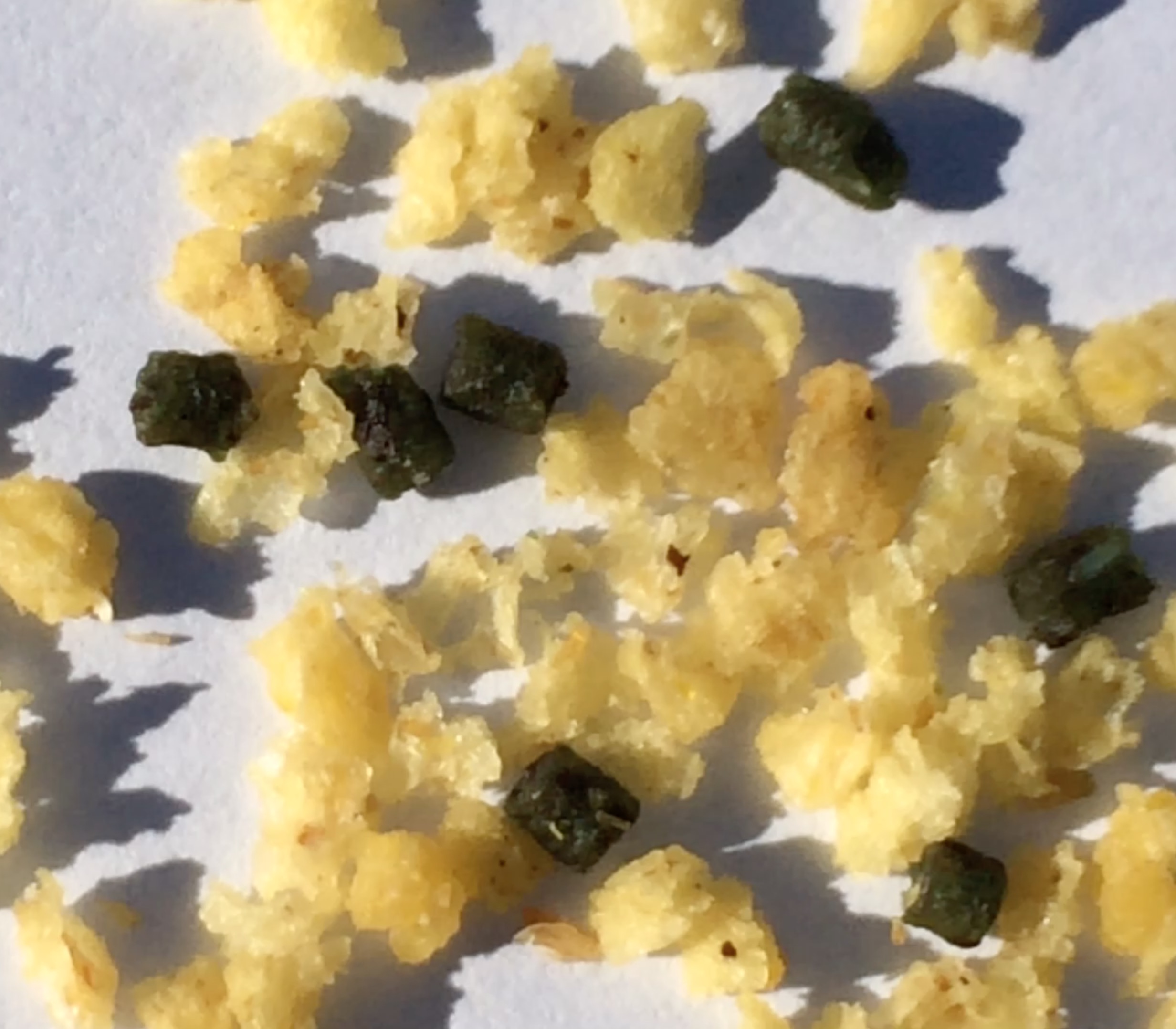
Two different food granules in PestXpert Nest Kill ant bait

An application of PestXpert Nest Kill Ant Bait will have a significant impact within 24-72 hours, with the nest eliminated within 1-2 weeks. However, there are some tricks to getting the best performance from PestXpert Nest Kill Ant Bait.

IMPORTANT NOTE: Granular ANT BAITS are not the same as insecticide granules (or sand). Baits contain food and are taken back to the nest – they are designed to kill the whole colony / nest. Insecticide granules are a contact insecticide, killing insects when they come into contact with the granules – they are designed to exclude insects from a particular area, they are unlikely to kill the nest.

Treating the whole lawn

In many cases it’s not possible to find the nest or indeed the whole lawn may be riddled with ant nests. In such cases, granular ant baits such as PestXpert Nest Kill become the best option. Simply sprinkle the bait over the area where the ants are active, and the ants themselves will do the rest.

Two pack sizes are available depending on the area to be treated:
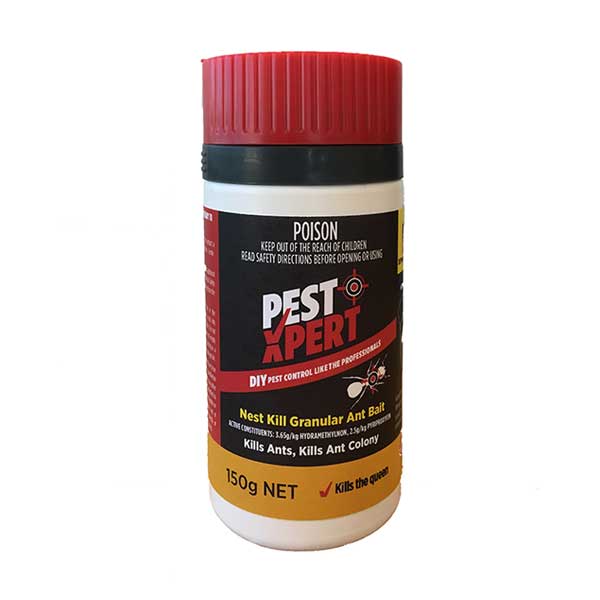
  • 150g pack: Ideal for small-medium lawns. Treats up to 750m2
  • 500g pack: Ideal for medium-large lawns. Treats up to 2500m2
Nest Kill Ant Bait
PestXpert Nest Kill Ant Bait comes in 2 pack sizes
funnel ant nests in lawn
Funnel ant nest make a mess of lawns and undermine the soil structure

Funnel ants are a unique species of ant, which live underground, digging up dirt into funnels or chimneys above ground. In a lawn they can make a big mess! Baits are not very effective with funnel ants partly because of where they live (below ground) and partly because of their feeding habits. Directly nest injection into each funnel can provide good results, but a major infestation can be a challenge and may require multiple treatments.

The use of PestXpert Nest Kill ant bait can also be worth a try. However, with the ants living underground and generally foraging at night, it is a challenge to carry out an effective application; particularly as the bait becomes unattractive if wet (which can happen with overnight dew or rain). If you are going to use this option, either pour some bait down each funnel or carry out an area application when dry overnight weather is guaranteed. Try your technique on a small area first to see if it works.

How long do lawn ant treatments last?

If you kill the nest, the ants obviously won’t return. However, it won’t stop new ants setting up their nests in your lawn in the future (a nice lawn, clear of competition is irresistible real estate for an ant queen!). However, it may take many months for this to happen ­– plenty of time to enjoy your lawn.

But if ants do become a problem again in the future, at least you will know what to do!

Originally Published: January 12, 2018
author bio image

Author:

Gordon Reidy has over 30 years experience in Pest Control Product Development and Product Safety. As the lead formulator at PestXpert, he has helped develop some of Australia’s most trusted household pest solutions. With a PhD in Toxicology, Gordon is passionate about delivering effective, science-backed products that are safe for families and the environment.

Share This Post

Further Reading

  • Coastal brown ants taking bait granule back to nest
    How do Ant Baits work?

    It is important for those carrying out DIY pest control to know how ant baits work, so they can choose the correct ant bait for their particular situation. Ant baits – Basic Information What goes into an ant bait? Ant…

  • big headed ant or coastal brown ant
    Types of Brown Ants in the House and Yard

    It’s a weird thing… generally speaking, in Australia, brown ants seem to be more of a pest outside the home than inside the home, whereas black ants tend to be more of a pest inside the home. Let’s have a…

  • Tyrant ant
    Types of Black Ants in the House and Yard

    Finding black ants in the house is a pretty common problem. However, getting rid of the ants isn’t always that straight forward. To get control you need to be able to identify the ant species and know a bit about…

  • green head ant
    Green ants – Green head ant or Green Tree ant?

    There are two “green ants” in Australia - the green head ant and green tree ant. If you want to know the difference and how to get rid of them. Check out our blog…

  • coastal brown ants digging up dirt under pavers
    How to Get Rid of Ants in Your Pavers

    Ants digging up the dirt in and around pavers can make a real mess of paths and driveways. If left untreated they can undermine the pavers, creating an uneven surface that can be dangerous and expensive to fix. Far better…

  • Black house ant with larvae
    Tips to Control an Ant Infestation

    Most homeowners struggle to get rid of ants....... and it's not easy, even for professional pest controllers! To get lasting control of ants you need to kill the whole nest, particularly targeting the queen(s). To do this successfully you need…