How to control mosquitoes
A perfect Summer evening, entertaining outside with guests….. ruined by the high pitched whining in your ear of mosquitoes looking for a meal! Mosquitoes are annoying, their bites are itchy and they can transmit serious diseases. The need to control pests inside and outside the home is important so you can enjoy life and keep healthy. Controlling these insects requires combining mosquito prevention tips with suitable mosquito control products.
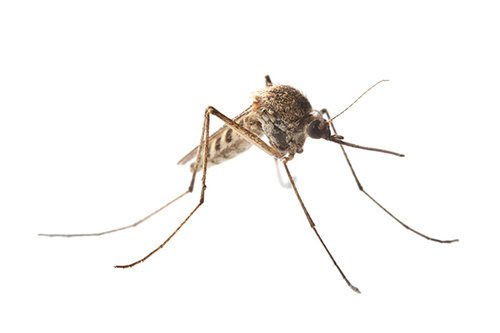
ADULT MOSQUITO

MOSQUITO LARVAE OR "WRIGGLERS"
MOSQUITO IDENTIFICATION
WHAT DO MOSQUITOES LOOK LIKE?
- Eggs: Eggs are laid in water singly or in “rafts” containing multiple eggs. The exact location will vary by species, but typically they are laid in stagnant or slow moving water.
- Larvae: The larvae or “wrigglers” can often be seen in pools of water. They rest upside down with the “tail-end” of their body pointing through the water surface to breathe. They dive or wriggle away from the surface when disturbed.
- Adults: Everyone could probably identify a mosquito, they are insects, part of the fly family. Their size depends on the species but they rarely exceed 1.5cm in length. Their mouthparts have been adopted to allow them to pierce skin and suck up blood.
SIGNS OF AN INFESTATION
Signs of mosquito infestation are fairly obvious – lots of mosquitoes and lots of bites! However, if you want to get an early indication a problem may be brewing, keep an eye on any pools or water around your property. If you can see lots of “wrigglers” you know will be about get an invasion of adult mosquitoes.
MAIN PEST SEASON
In most parts of Australia the main mosquito season is during the warmer months, with invasion more likely a couple of weeks after heavy rain. In the tropical areas, they can be a year round issue, although numbers are certainly higher in the warmer, wet season.
MOSQUITO FACTS
- They are found throughout Australia, although different species will dominate in different parts of Australia. Numbers are considerably higher around the wetter coastal areas.
- Adult mosquitoes eat nectar and other plant juices. Only the female mosquito bites, requiring a blood meal before laying eggs.
- Mosquitoes are not only a problem at dusk and during the night. Some species are day biters such as the Asian Tiger mosquito (Aedes aegypti) which carries Dengue Fever.
- The high pitched sound you can hear when mosquitoes are near your head, is from the rapid beating of their wings.
- These insects are known to carry a lot of serious (sometimes) fatal diseases. In Australia we have Ross River fever and Barmah Forest disease, Dengue Fever (in Northern Queensland) and Murray Valley encephalitis.
MOSQUITO PREVENTION TIPS
- The key action to minimise mosquito numbers on your property is to remove potential mosquito breeding sites. Eliminating all sources of standing water will remove egg laying sites. These include ponds, plant pots, drains and blocked gutters.
- Stopping them coming inside is best achieved using mosquito screens
- When outside wearing loose, long-sleeved tops and long trousers with socks will significantly reduce the chance of mosquito bites.
For more details on preventing a mosquito outbreak check out our blog article on mosquito prevention tips for homeowners
MOSQUITO CONTROL TIPS
- To control the occasion mosquito inside the house, use a flying insect aerosol to spray towards the insect. Spraying the aerosol into the air will create a cloud of insecticide which the mosquito will fly through.
- If you experience a large number of mosquitoes indoors (especially if you do not have insect screens), spray insecticide onto surfaces where they rest during the day. Typical resting places are dark, sheltered places such as behind cupboards and drawers, under furniture and behind pictures.
- Reducing adult numbers outdoors can be achieved by spraying surfaces where mosquitoes may rest, these include under eaves, decking roofs, decking flooring, under plant leaves and general sprays on the exterior walls of homes near entertaining areas.
For the ultimate guide to pest control for mosquitoes check out our 5-Step Mosquito control guide for homeowners
PESTXPERT PRODUCTS AND SPRAYS
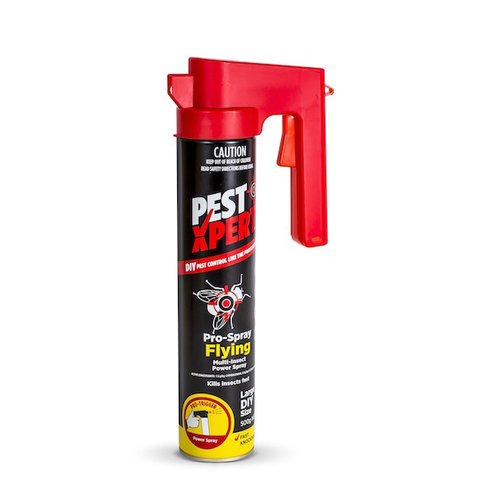
- PestXpert Pro-Spray Flying aerosol is the idea product for direct spraying at mosquitoes. With its fine droplet size for good “hang time” and dual active formulation, it provides fast control – a great mosquito spray.
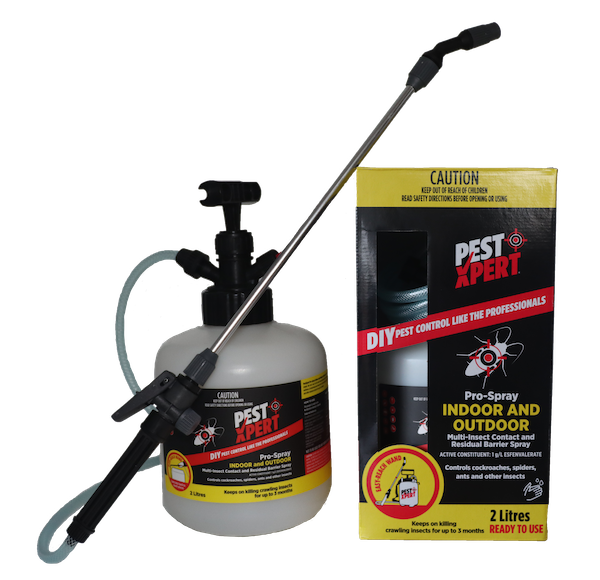
- To target indoor resting areas use either the Pro-Spray flying aerosol or Pro-Spray Indoor and Outdoor. With its flexible nozzle the Pro-Spray Indoor and Outdoor is ideal for getting behind and under furniture.
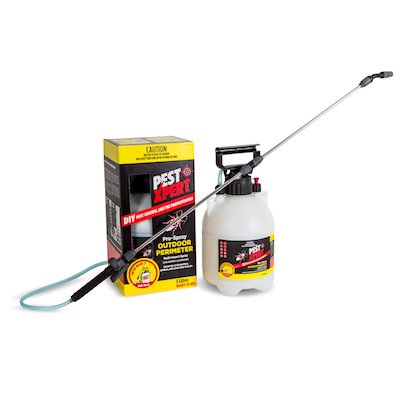
- PestXpert Pro-Spray Outdoor Perimeter is the ideal product for treating the mosquito resting places outdoors. With its 1m spray wand you can safely target application areas and the formulation is suitable for application to plants (not for use on plants that are to be eaten). Such products are no designed to kill the mosquitoes in the air, but are ideal long lasting mosquito killers when applied to surfaces