How To Get Rid of
Pantry Moths

Indian meal moth or pantry moth
Adult pantry moth

Check out how to use our total moth control product to protect your food from pantry moths!

Maybe you go into the pantry to grab some flour and you notice some strange webbing on the surface of the flour or maybe even a grub? Only then do remember seeing those small moths flying around the house. You’ve got pantry moths!

Losing the occasional packet of flour or cereal can be annoying, but if you don’t get on top of the problem, you could be facing an ongoing battle. However, with good preventative measures and an appropriate pantry moth treatment, you can get rid of pantry moths.
Pantry Moth Identification

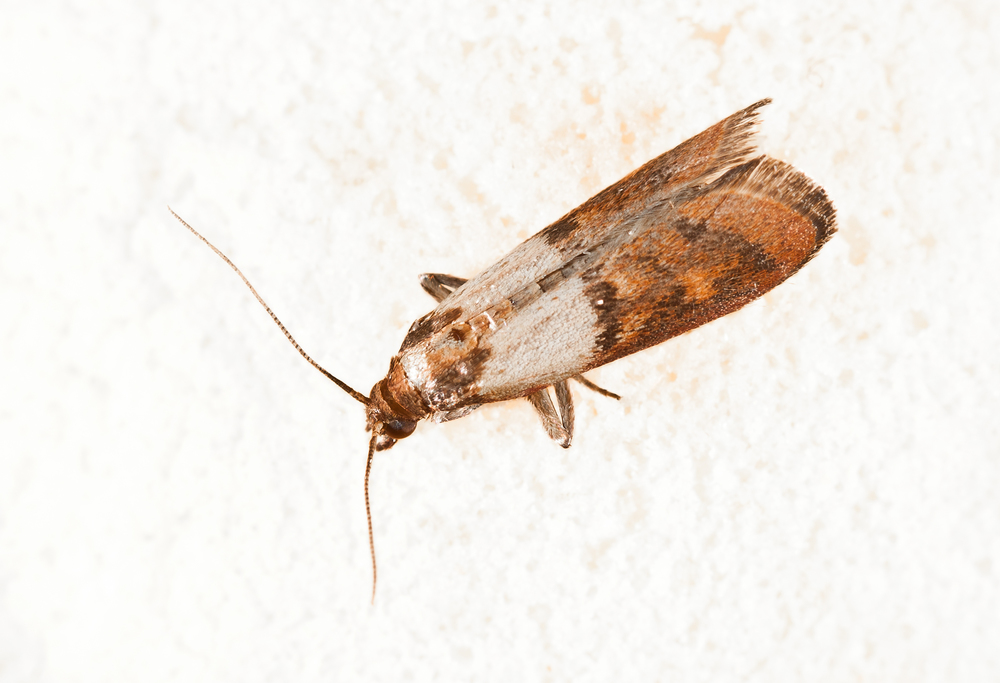
Indian meal moth or pantry moth
The Indian meal moth is the most common pantry moth

What do they look like

  • Pantry moth eggs are small, round white eggs, about 0.5 mm in diameter. Up to 400 eggs will be laid on the surface of a suitable food.
  • The larvae or caterpillars are cream coloured with a dark head. They can grow up to 2 cm long. They often leave their feeding site and climb to a higher location to pupate.
  • The pupae are cream covered wrapped in webbing. They can often be seen higher up in cupboards or on the ceiling cornices of rooms.
  • The adults are just over 1 cm long and a light grey colour with the tip half of their wings a bronze colour.
  • Life-cycle:
    Eggs – Hatch in 2-14 days
    Larvae – Go through 5-7 instars. It takes between 25 and 275 days before they are ready to pupate. Duration is dependent of food availability and temperature.
    Pupa – The adults hatch between 4-10 days.

Back to Pantry Moth Menu

Key Pantry Moth Facts

Indian meal moth on cashew nuts
Pantry moths will attack a wide range of dried food, including nuts
  • Pantry moths are found throughout Australia.
  • Pantry moth larvae will eat a wide range of vegetable foods, with a preference for dried cereal products such as rice, pasta, biscuits, breakfast cereals and bread, but will also eat dried fruit, spices, cocoa and nuts.
  • Smaller larvae are able to crawl around the grooves of a closed screw lid (if not screwed on tightly).
  • The larger larvae are able to bite through plastic packets.
  • The adults are not strong flyers, so if you have a pantry moth problem, it is likely they were originally brought into the house in a food container.
  • Check out our blog for information on other pantry pests (stored product pests)

Back to Pantry Moth Menu

Signs Of A Pantry Moth Infestation

Pantry month larvae tunnels in flour image
Pantry moth larvae “tracks” in flour jar
  • Webbing may be seen on the surface of foods or food packaging. This hides the feeding larvae underneath.
  • “Tracks” may be seen in containers where the larvae have been feeding.
  • Adult moths can be observed flying at dusk or at night around the house, especially the kitchen area.

Main Pest Season

Pantry moths will be active during the warmer months.

Back to Pantry Moth Menu

Pantry Moth Prevention Tips

Pantry moth infestation inside flour container
Pantry moth infestation inside flour container, with poorly fitting lid
  • Ensure all food stuffs are stored in tightly sealed, plastic / metal / glass containers (not plastic bags).
  • Clean up any dried food spills in the pantry.
  • Carry out regular pantry clean ups (suggest once a month) to clean up any spills, check containers for signs of pests and throw out any old food.
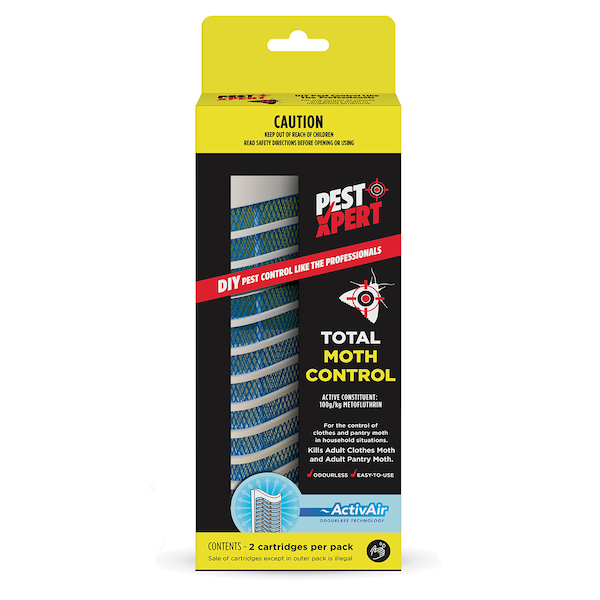
  • Place one or two Total Moth Control cartridges in each cupboard to control adult moths before they have a chance to lay eggs.

Back to Pantry Moth Menu

How to Control Pantry Moth

PestXpert Total Moth Control
  • Before carrying out a treatment, it is essential to carry out a thorough inspection:
    1) Inspect all your food cupboards and each container individually (even unopened packets / containers), for signs of pantry moth larvae.
    2) Throw out all affected food (place in bags and seal before placing in garbage).
    3) Clean all food cupboards.
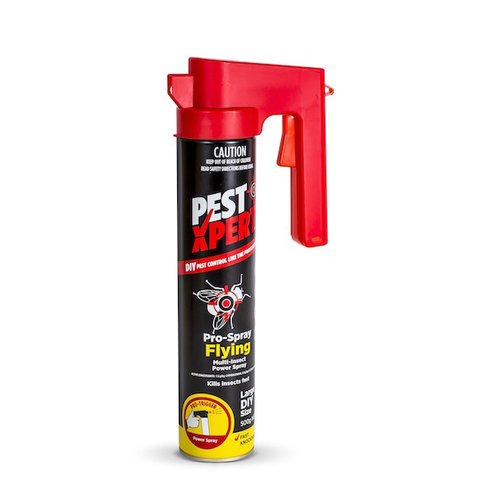
  • Any moths flying around the house can be sprayed with a flying insect aerosol.
  • Place one or two Total Moth Control cartridges in each cupboard to control any moths entering the cupboard.
  • The inside edges and corners of food storage areas can be sprayed with a suitable insecticide as long as there is no direct contact with food.
  • Carrying out the prevention measures to help prevent problems in the future.

Back to Pantry Moth Menu

PestXpert Products For Pantry Moths

PestXpert Total Moth Control product is ideal to provide ongoing protection for your food. Replace cartridges every 3 months.
Pro-Spray Flying aerosol is great to have on hand to spray any moths seen flying around the house.
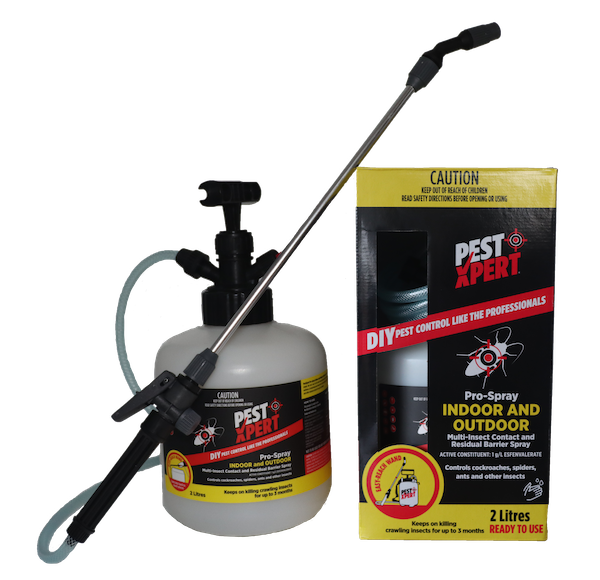
Pro-Spray Indoor and Outdoor can be used to treat the inside of food storage areas. Make sure all food containers are removed before spraying and that the treatment is dry before re-stocking. Ensure there is no direct contact between the treated surfaces and food
Back to Pantry Moth Menu

FAQs About Pantry Moth

There’s not really a good way to repel pantry moths, it’s best to simply kill them, so they can’t lay eggs on your food. PestXpert Total Moth Control will kill any adult moths entering your pantry cupboards.

Pantry moths are not particularly strong flyers. So it is unlikely they flew in from a neighbour, unless you live in a unit (or the houses are very close). It is more likely that the infestation arrived in your house inside some dried food packet.

Pantry moths are not poisonous and do not transfer diseases. However, they do spoil food, which has to be thrown out.

No, pantry moths and clothes moths are different moths. If fact there are several species of “pantry moths” and several species of “clothes moths”. It is the larvae of both moths that cause the damage, but interestingly the pantry both is a vegetarian, eating dried plant foodstuffs, whereas the clothes moth eats animal fibres.

Back to Pantry Moth Menu

PestXpert Blog

For the dedicated PestXperts…

The PestXpert Blog gets updated regularly with articles on pests, products and tricks of the trade.
Take your pest control knowledge to the next level and say goodbye to pest problems.

  • Slater or woodlouse
    How to Stop Slaters Invading Your Home

    Slaters entering the home can be a problem in Australia. Learn how to keep slaters out of your home and how to control them.

  • Indian meal moth or pantry moth
    What’s Eating My Food? Pantry Insects

    Pantry pests is a common name given to insects that infest stored products such as flour, cereals and indeed any dried foods. Sometimes you may not be even aware your food has been infested, but when you do… yuck! But…

  • Carpet beetle larva
    5 Facts About Carpet Beetles You Need to Know

    Carpet beetles are a common fabric pest. Although their name indicates they only eat carpets or rugs, they will eat a wide range of animal fabrics including wool, fur, silk, felt, feathers and leather. As with any pest problem it…

  • Silverfish
    10 Places Silverfish Like to Hide in your Home

    Secretive and nocturnal, a silverfish infestation can go unnoticed for some time. A versatile, primitive insect, silverfish can inhabit a wide range of hiding places in your house. Silverfish like to eat starchy foods, so they find paper and cardboard…

  • cockroach on pear
    Spring Cleaning? Do a Pest Spray!

    With the temperature warming up, everyone thinks about clearing up the yard for outdoor entertaining, which often leads to cleaning out the garage and then the house – a good Spring clean! If you are giving your house and yard…

  • Dog with petfood bowls
    Safe pesticide use for pet owners

    “Are insecticides safe to use around my pets?” is perhaps one of the most common question homeowners ask about pest control products. It’s a good question…. and important, because when using any pest control product, safety comes first! Learn more about…