How to control spiders
In Australia we have good cause to be nervous about spiders. A number of our key pests, such as the Redback, Funnel-web and White tail spiders, have nasty bites requiring medical treatment. Others, such as the Huntsman, are downright scary, although not so dangerous. So it makes sense to want to keep them out of the home, especially if you have small children and pets around.
There are two types of spider from a control point of view;
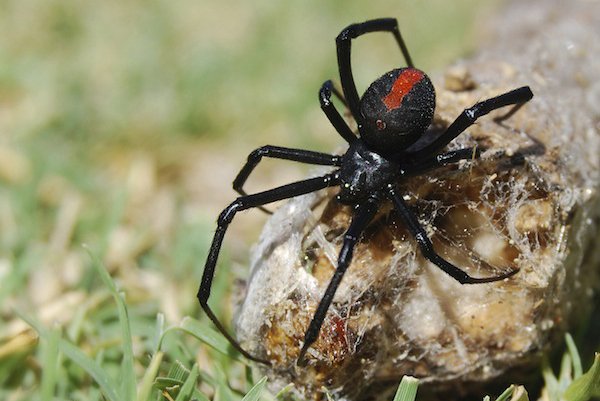
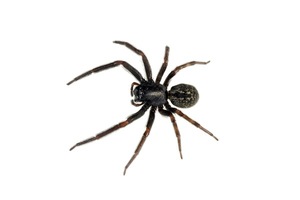
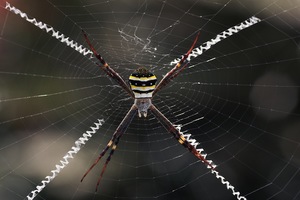
- web-building spiders (Redback, Black house & St.Andrews Cross spiders)
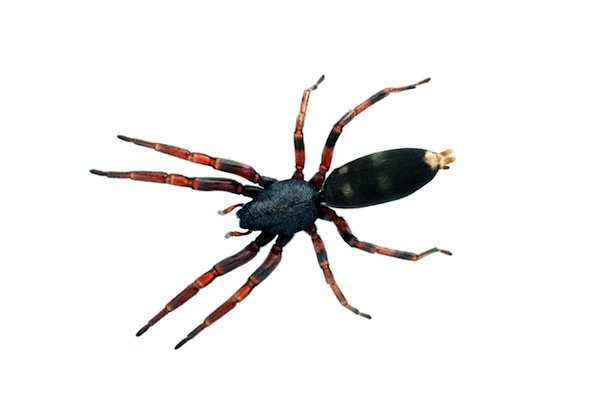
- running or hunting spiders (Funnel-web, Huntsman & White-tailed spiders).
Although Funnel-webs do build webs underground, from a control point of view they are classed as running spiders, as the male funnel-webs go “walk about” in Autumn looking for a mate.
Control of web-building spiders is relatively easy but control of running spiders is a lot more difficult. However, with a combination of preventative measures and appropriate treatments, you can certainly make a spider encounter a rare occurrence.
WEB-BUILDING SPIDERS :
HUNTING SPIDERS:
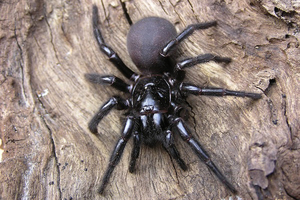
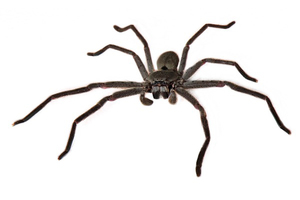
SPIDER IDENTIFICATION
WHAT DO SPIDERS LOOK LIKE?
Most people will know a spider has eight legs (and two body segments). As such they are arachnids and not insects – insects have six legs and three body segments. Although identifying spider species can require expert knowledge, most of the common varieties are easy to recognise.
- Redback spider: Female can be up to 3cm (male is many times smaller). Although we all expect a black spider with a red mark on the abdomen, young Redbacks tend to have a patterned mark rather than a red mark and sometime adults can be almost completely black.
- Huntsman spider: There are a number of Huntsman species of spider. Although their colour may differ, they all have the same body shape and are fast moving. Adult size varies from 6cm to over 15cm.
- Funnel-web spider: The Funnel-web is sometimes confused with the Mouse spider, Trapdoor spiders and even Black House spiders. It will raise its front legs when provoked (but so will Mouse spiders). Basically, if its a large black spider that you think could be a Funnel-web spider, don’t touch it!
- White tail spider: A slender spider up to 2.5cm long with brown and black striped legs. White tip to the abdomen.
- St.Andrews Cross spider: A common “garden spider” that builds large webs in between trees and bushes. Black and yellow stripes on abdomen. When resting it pairs its legs together to form the four “arms” of St.Andrews Cross (Scottish Flag).
- Black House spider: A grey / black spider up to 2.5cm, with a feint pattern on the abdomen. Typically builds webs around windows, doors and eaves, often with a funnel like entrance. (But it’s not a Funnel web spider, they build webs in the ground and under logs).
Young spiders are generally miniature forms of the adult and often remaining on the female or near the web until bigger. The young hatch out of egg cases, when are white round or disc-like, dense balls of webbing material. If you see an egg case near a spider, it is likely it will be more aggressive, so beware!
SIGNS OF AN INFESTATION
- An infestation of web-building spiders is fairly easy to spot; a build up of webs on the house will indicate Black house spiders, webs in the garden will indicate St.Andrews Cross spiders or other garden varieties. A Redback infestation may be hard to spot as their webs are a little less obvious. Redback webs tend to be more open (like a fishing net), often with leaves and other debris incorporated. They also like hiding under rocks and inside tubular metal fencing, making their webs difficult to see.
- It is very rare to have an “infestation” of running spiders. Certainly, there can be occasions when running spiders are more common. As a general rule, if you have lots of web-building spiders (indicating good conditions and plenty of insects for food), you will also get an increase in running spiders.
MAIN PEST SEASON
Spiders will be more common in the warmer months in temperate and sub-tropical regions, but will be ever present in the tropics. Huntsman and white tailed spiders will often come inside during the Summer, partly looking for food and partly to get out of the heat. Encounters with Funnel-webs are more likely in the Autumn when the males go searching for a mate or after heavy rains when the get washed out of their burrows.
SPIDER FACTS
- Redback spider: Redbacks live in dry sheltered sites, under rocks and logs, in tubular fencing, in roof voids… in the outside dunny! The female Redback will often eat the much smaller male spider after mating.
- Huntsman spider: Huntsman spiders tend to live under rocks and bark (thus their very flat body shape – which make them very adept at squeezing into cars!).
- Funnel-web spider:Tend to live in sandy soils in moist areas, under rocks and logs. The males go wandering to find a female mate in Autumn and often come into houses (and hide in shoes) or fall into swimming pools (where they can survive for several hours under water).
- White-tailed spider: Prefers cool moist locations, such as the mulch in garden beds. Will come inside in Summer to escape the heat, often hiding in sheets and clothing on the floor. Their favourite food is Black house spiders.
- St.Andrews Cross spider: St.Andrews Cross spiders live in trees and bushes often building significant webs which can span up to a metre or more.
- Black House spider: Normally found under rocks and in trees but is well adapted to building webs around the home; around windows, doors and eaves.
SPIDER BITES
- Redback spider: The Redback spider delivers an extremely painful bite which can be lethal if not treated. It releases a nerve poison, which can result in headaches, nausea, vomiting, abdominal pain and sometimes paralysis. If bitten, seek immediate medical help as anti-venom may need to be administered.
- Huntsman spider: They can give a slightly painful bite, but are a very timid spider, preferring to run away.
- Funnel-web spider: The Funnel-web bite is extremely painful and fatal if untreated. It is capable of biting through gloves and shoes. It is a very aggressive spider and should be avoided. If a bite is suspected, medical assistance should be obtained immediately, as an anti-venom is often required.
- White-tailed spider:The white tail spider delivers a painful bite which can cause nausea and burning pain. The bite site can become swollen and very itchy. Although there have been reports of necrosis / gangrene, these have not be supported scientifically. In cases where this has occurred, it is more likely from a post-bite infection (possibly from excessive scratching). The venom itself has no necrotic properties.
- St.Andrews Cross spider: Can sometimes bite. Medical attention should be sought if a bite is suspected.
- Black House spider:It has a painful bite that is poisonous but not lethal. Reaction to a bite may include sweating, nausea and giddiness. Medical attention should be sought if a bite is suspected.
SPIDER PREVENTION TIPS
- Keeping garden beds away from the edge of the house will significantly reduce the spider population.
- If garden beds next to the house are kept in place it is important to keeping vegetation trimmed back from the edge of the house and paths.
- Keep clothes and shoes off the floor to reduce hiding places.
SPIDER CONTROL TIPS
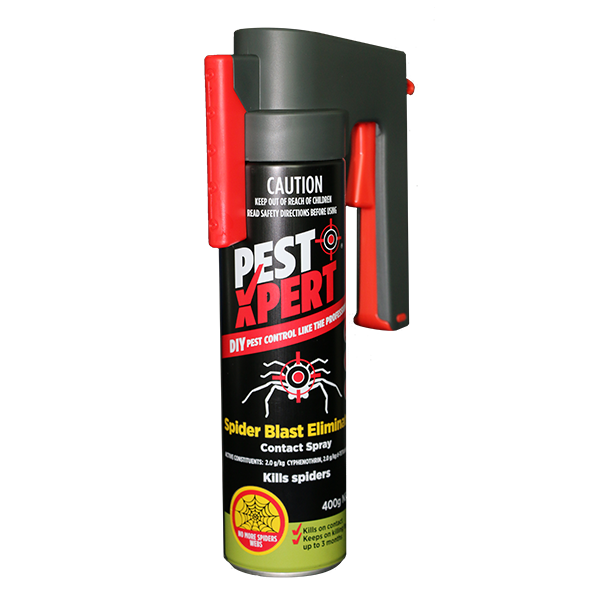
- A crawling insect aerosol should be kept on hand to spray the occasional unwanted spider. Ensure the spider receives a good dose and keep your distance. The new PestXpert Spider Blast Eliminator with its extra power is an ideal option.
- The best treatment for web building spiders is to spray their webs and hiding places with an insecticide (ready to use pump back or aerosol). The key tip to get the best performance is to wait a day or two after spraying before brushing down any webs. This ensures the spiders will have picked up a lethal does of insecticide (by walking on the web) and by using a brush (rather than hose), you can ensure the insecticide remains in place to prevent new spiders taking up residence.
- To prevent web-building spiders taking up residence in the first place, spraying around doors, windows and vents, as well as under eaves and guttering delivers excellent results. As these spots tend to be sheltered from sun and rain, the treatment can last many months. To get deep into hiding places you can use the power of PestXpert Spider Blast Eliminator.
- It is a lot more difficult to prevent running spiders entering the home. Carrying out a preventative spray around the perimeter of the home and any openings will have some benefit, although running spiders often walk on the tips of their legs, preventing them from picking up a lethal dose of insecticide. However, if you carry out a preventative treatment for web-building spiders and other insects, the changes of running spiders coming in are reduced, as there is little prey around.
PESTXPERT SPIDER PRODUCTS
- Spider Blast Eliminator is the ideal product for spot treatments of spider hiding places. With its unique high power, 5 nozzle spray, it can get deep into crack and crevices. It’s also great for direct spray of spiders, as you can keep your distance!
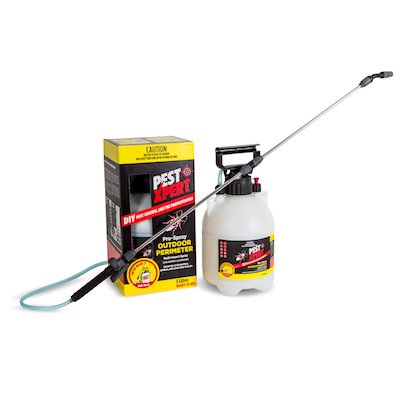
- For long lasting preventive treatment use either the Pro-Spray Indoor and Outdoor or the Pro-Spray Outdoor Perimeter to spray all the surfaces where spiders build webs. The Pro-Spray Outdoor Perimeter with its 1m spray wand allows eaves to be reached safely.
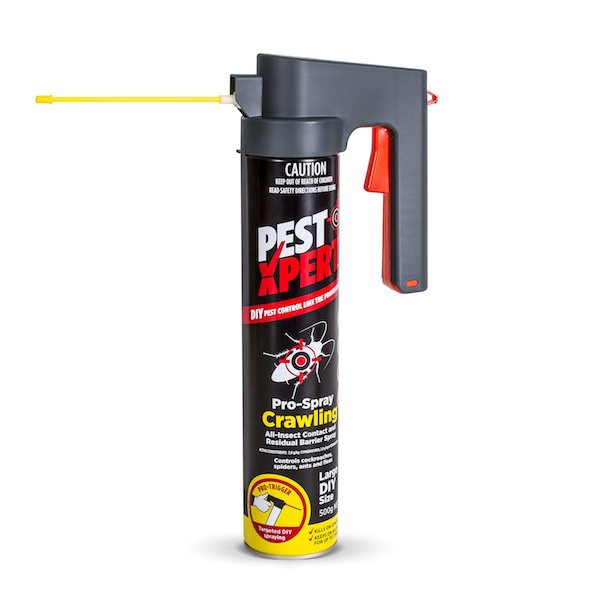
- Pro-Spray Crawling aerosol can also be used for the direct spray of the occasional spider invader. It is also ideal for spot treatments into crack and crevices, with its extendable nozzle and ability to spray upside down.