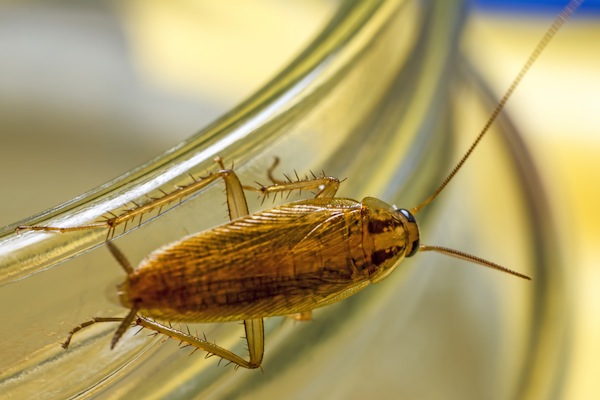
 German cockroach infestations are best dealt with by using cockroach baits
Successful control of a cockroach problem requires three critical steps
When it comes to choosing the correct cockroach treatment, the use of cockroach baits should be an integral part of any program.
Part of the challenge of dealing with a cockroach problem is finding the source of the infestation. But even if you suspect you know where they are coming from, applying an appropriate product to deal with the problem can be tricky. However, cockroach baits are designed to use natural cockroach behaviour to overcome these challenges.
Cockroaches live in communal harbourages (or ‘nests’). Although adult cockroaches and older nymphs (immature cockroaches) leave the harbourage to feed, the young nymphs remain in the harbourage until they get older – they survive by feeding on the faeces and body secretions of other cockroaches (pretty gross!). If the cockroach treatment only targets the cockroaches that leave the nest, the young cockroaches back in the nest will remain to cause a problem in the future.
Cockroach baits consist of a food attractive to cockroaches and a slow acting insecticide. There is no need to find their hiding place; by placing bait where the cockroaches are active, they find the bait when they are out foraging and feed on the bait. The baits are not fast acting by design. They often take several hours to have an effect, which allows the foraging cockroaches to return to the harbourage before the toxicity of the bait is evident. This is key to the success of baits. When cockroaches become affected by bait, they start to vomit. This vomit (and any faeces they produce) will contain small amounts of the insecticide. As we know, the young cockroaches love faeces and vomit and so they unwittingly consume the insecticide as well. In this way, cockroach baits can deliver complete population control.
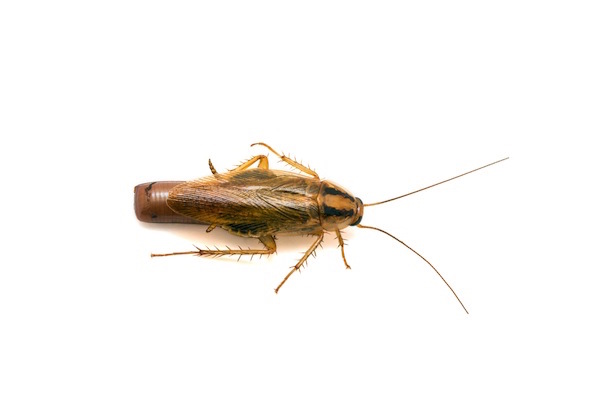 German cockroach (1.5cm) and egg case
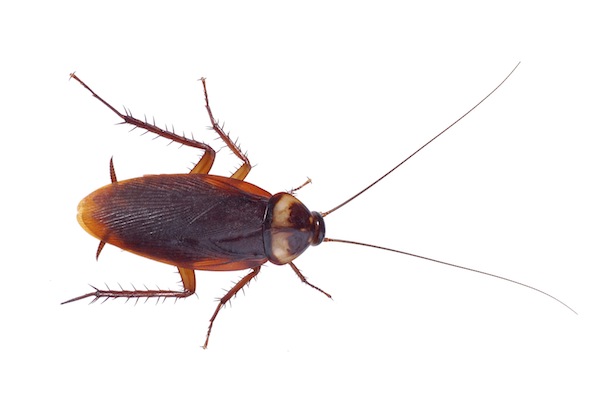 American cockroach (up to 5cm)
The short answer is yes; a good cockroach bait should work on all the key pest cockroaches. However, when considering ‘large’ and ‘small’ cockroaches, there are some significant differences in where they live and their behaviour that influence the importance of cockroach baits in any treatment program.
‘Large’ cockroaches, such as the American and Australian cockroaches, tend to live outside in drains and sewers, around bins, in the sub-floor and roof voids. Although they will occasionally set up home in kitchens and bathrooms (if food and water are plentiful), they generally only find their way into homes ‘by accident’. For such cockroaches, a residual insecticide treatment around the perimeter of the home and in suspected hiding places should be the first part of any treatment. This can be supplemented by a bait treatment indoors if required.
However, ‘small’ cockroaches such as the German cockroach and brown-banded cockroach live inside homes. German cockroaches will normally set up home in kitchens and bathrooms, occupying the smallest of cracks and crevices, including door hinges, control panels of dishwashers, microwaves and toasters, as well as under fridges, cupboards and cookers. Brown-banded cockroaches tend to take up residences in ‘dryer’ locations such as bedrooms and living rooms – it is not uncommon for them to set up home inside televisions.
With ‘small’ cockroaches occupying sensitive areas such as kitchens, where spraying may be of concern, or inside appliances where you simple cannot spray anyway, the cockroach bait is the smart solution.
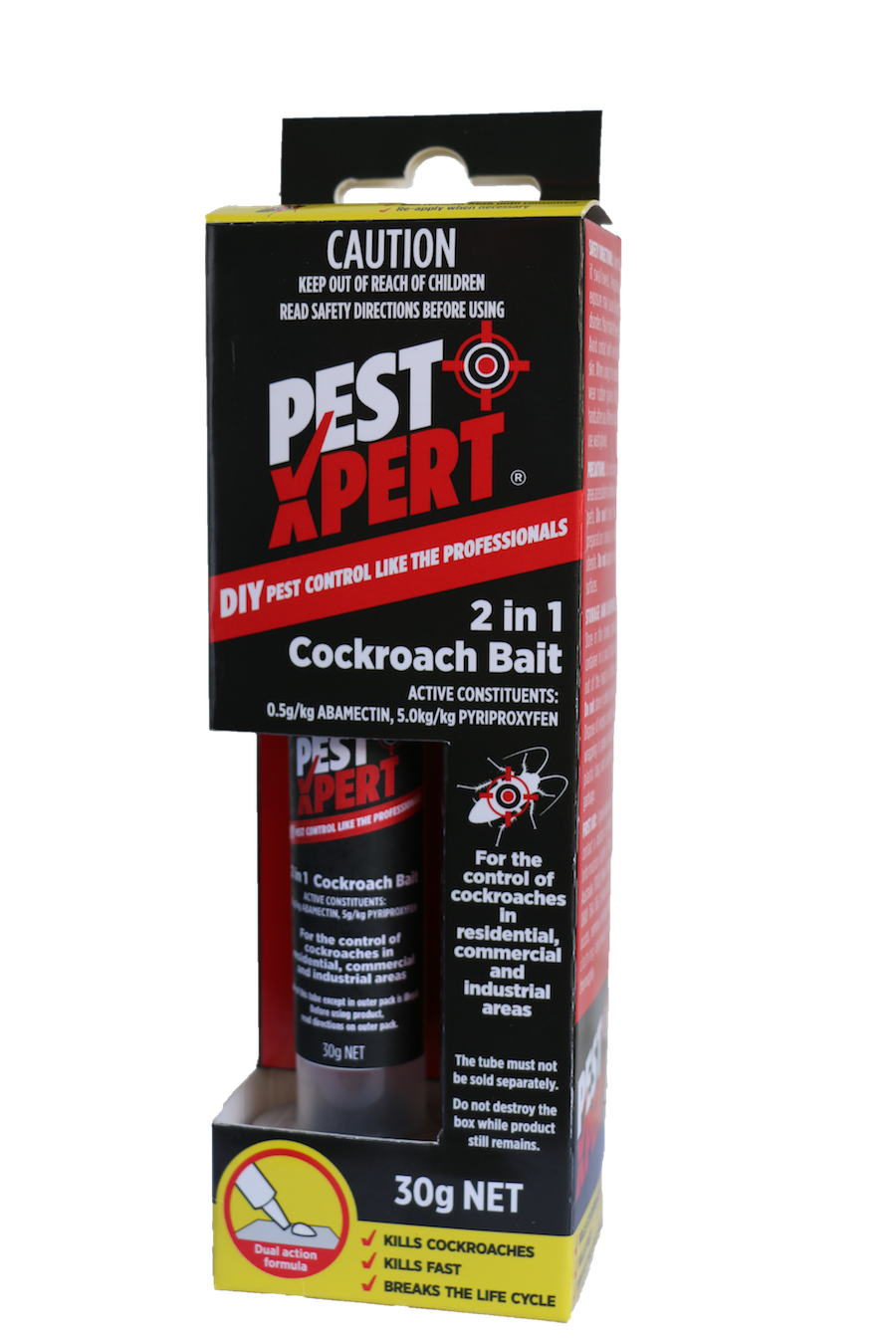
There are two types of cockroach bait on the market; pre-dosed plastic bait stations and cockroach gels, such as PestXpert 2 in 1 Cockroach Bait, which are the more professional option.
Cockroach bait stations are convenient in that they can be quickly placed where required and the bait matrix is protected from contact with pets and children. However, the plastic bait stations don’t have the flexibility to be placed in all the locations required to get good control. In addition, the bait stations also contain a solid bait matrix, which tends to be less attractive than the gel baits, which have a higher moisture content and release more attractants.
Cockroach gels are therefore the product of choice for professionals, as not only do the formulations provide the best performance, but also the flexibility in bait placement allows a thorough treatment to be carried out, resulting in complete population control.
‘Small’ cockroaches, such as German cockroaches, do not travel very far from their hiding places, normally only 1-2 metres. So, although you do not have to find their hiding places, you do need to place the cockroach bait nearby likely harbourages.
Recommended cockroach bait placements:
The key to success with cockroach baiting is to apply numerous, small bait placements – small dots of gel in many locations, rather than applying big blobs or lines of gel, or bait stations in fewer locations.
IMPORTANT TIP: If you are going to use insecticide sprays as well as baits to deal with your cockroach problem, it is important that you don’t apply a spray in the same area as the bait placement. Sprays tend to be repellent to cockroaches and so will prevent cockroaches being attracted to the bait, therefore reducing their effectiveness. A good strategy is to place bait in and around the cupboards and to spray around the perimeter of the room.
The safety profile of a modern cockroach gel, such as PestXpert 2 in 1 Cockroach Bait, with the small amount of product placed and the tiny amount of insecticide in the bait, means that the risk to pets and children is minimal. However, with safety the number one consideration, the best option is to not use in areas accessible to children – discrete placement of gel dots in the locations suggested will keep the gel out of sight and minimise the chance of contact from prying paws and little fingers.
PestXpert 2 in 1 Cockroach Bait is a professional cockroach gel. Not only is the matrix highly attractive, the unique formulation contains two different insecticides; one for killing the cockroaches and one for breaking the breeding cycle. This second insecticide is active at incredible low concentrations, so even if a cockroach doesn’t eat enough bait to kill it immediately, they will still eat enough bait to stop it growing and laying eggs – breaking the breeding cycle.
High performance cockroach baits will start to work within 24 hours, with control of the population within 7 days. Monitor cockroach gel placements – if they have been eaten out, you should place some further gel dots as you may have a bigger problem then you thought!
Cockroach baits, including cockroach gels, tend to remain attractive for up to 3 months, after which they should be replaced, especially if you intend to use cockroach baits as part of an ongoing cockroach prevention program.
Preventing large cockroaches coming in from outside can be achieved with a good external treatment and good screens. Preventing small cockroaches setting up home inside can be achieved with a range of good housekeeping actions:
However, if you are particularly prone to cockroach infestations – maybe there are sewers nearby or you live in an apartment block (where cockroaches can easily travel from one unit to another) – using cockroach baits as a preventative treatment is a good idea to control any occasional invader before they have a chance to set up home, breed and create a big problem. Placing bait in the potential cockroach hiding places and replacing the bait every 3 months will do a great job in keeping your home cockroach free.
Check out PestXpert 2 in 1 Cockroach bait as the new option for homeowners to get professional level cockroach control